
By now most of us are aware that not all games and software require a fabulous gaming rig of ultra-super performance. Most games are playable at decent qualities with laptops having far lower specs built at an affordable price. In this post of Best Gaming Laptops Under $800 we will introduce and review a few of the best chosen in the said price range, which will surely meet your budget gaming requirements.
Dell Inspiron 15 Vs ASUS ROG G531GT– Best Overall Pair of Gaming Laptops Under $800
| Dell Inspiron 15 3530 | ASUS TUF Gaming F16 |
| CPU: Intel 13th Gen Core i5-1334U Up to 4.6 GHz | CPU: Intel Core 5 210H |
| GPU: Intel UHD Graphics | GPU: NVIDIA GeForce RTX 4050 |
| RAM: Up to 32GB DDR4 | RAM: 8GB DDR5 |
| Storage: 1TB M.2 SSD | Storage: 512GB SSD |
| Screen: 15. 6- (1920 x 1080) LED FHD Anti-Glare Display | Screen: 15. 6″ (1920 x 1080) FHD 144Hz |
| Dimensions:9.27″ L x 14.11″ W x 0.75″ H | Dimensions: 13.94″L x 0.88″W x 9.88″Th |
| Connectivity: Realtek Wi-Fi 6 (802.11ax), Bluetooth | Connectivity: Wi-Fi 6 (802.11ax) |
| Ports: ; 1 x USB 3.2 Gen 1 Type-A, 1 x USB 3.2 Gen 1 Type-C (data only), 1 x USB 2.0, 1 x HDMI 1.4, 1 x Headset Jack, 1 x SD Card Reader | Ports: 2x USB 3.2 Gen 1 Type-A ,1x USB 3.2 Gen 2 Type-C, 1x Thunderbolt, RJ45, 1x 3.5mm Combo Audio Jack 1x HDMI 2.1 FRL |
Performance
Since this is the key aspect where everyone is focused about, kicking off the review for Best Gaming Laptops Under $800 with the performance deemed appropriate. This is where that extra $100 does all the talking. The RTX 4050 is a modern, dedicated gaming GPU. Testing games such as shadow of the tomb raider, Far cry 5, GTA V, Ghost recon with the Asus TUF, the following analysis can be obtained. At Full HD and very high settings all are playable at a maximum of 70+ fps.
Cyberpunk 2077: 1080p, High Settings (DLSS On): A smooth 60-70 FPS. This is playable with eye candy. Shadow of the Tomb Raider: 1080p, Highest Settings: Easily 80+ FPS. Elden Ring: 1080p, High Settings: A locked 60 FPS. Valorant / CS2:* 1080p, Low Settings: 200+ FPS, fully exploiting the 144Hz screen. Overwatch 2: 1080p, Epic Settings: 100+ FPS. The Game-Changer DLSS 3. In supported games, this AI tech can double your frame rates. It’s a massive advantage the Dell simply cannot touch.
For the Inspiron gaming, you’ll spend most of your time tweaking settings to “Low,” targeting 60 FPS at 1080p or even 900p. It’s for patience, not performance. Cyberpunk 2077 or Far Cry 5 at 1080p is unplayable (sub-30 FPS even on Low). Valorant: 1080p, Low Settings: 70-90 FPS. Playable. Overwatch 2: 1080p, Low Settings: 50-60 FPS
Both CPUs are strong. The Inspiron’s newer i5-1335U is fantastic for efficiency and general tasks. The TUF’s i5-12500H is a raw power brute for gaming and heavy workloads. In Cinebench (multi-core), the TUF’s H-series chip will demolish the Dell’s U-series chip, as you noted. Geekbench 6 (Single/Multi): Both will score highly, with the TUF likely leading in multi-core. Your “13,000+” score for the Dell would be for Geekbench 5, not 4—a good score.

Battery life and Heat
The Inspiron wins here unquestionably. It’s built for efficiency. The Intel i5-1335U is a low-power “U-series” chip, and the Iris Xe graphics sips power compared to a dedicated GPU. This is a laptop you can unplug for a workday at a coffee shop or a cross-country flight. 6–8 hours of mixed use (web browsing, office apps, video streaming at medium brightness). If you are gaming though, the battery will hold up to a couple of hours, no more. The Asus on the other hand, is a desktop replacement. You will live near an outlet which goes without saying. The dell with the single fan will spin up with a noticeable medium-pitched hum.
The bottom and keyboard center can get quite warm to the touch (not burning, but you’ll feel it). This is the limit of its simpler cooling system. For regular work, it’s perfect and so is the Asus. Under Gaming Load: This is where its dual-fan cooling system earns its keep. it is audible—a focused, whooshing roar that’s loud but not invasive. The keyboard deck stays remarkably cool where your hands are (by design), but the hot air gets aggressively vented out the back and sides. It’s designed to sustain high performance, though the CPU/GPU will still get into the 80-90°C range under max load which is normal and by design for gaming laptops.

Conclusion
Well there you have it! First comparison for the best gaming laptops under $800. Yes the Asus is $882 but it’s such a good deal for the price we couldn’t help squeezing it in. The $100 difference isn’t just about FPS. It’s about choosing a lifestyle: the versatile, on-the-go productivity machine vs. the stationary, plugged-in gaming rig. There’s no wrong answer, only the right tool for their specific day-to-day. But the fact is, the Asus TUF is a hands down powerhouse well worth the bucks.
Purchase here->
Purchase here->
HP Victus Vs Acer Nitro V
| HP Victus | Acer Nitro V |
| Intel Core i5-12450H | 13th Gen Intel Core i5-13420H |
| Up to 32GB RAM | 8GB |
| RTX 3050 (4 GB GDDR6) | RTX 4050 |
| 1TB PCIe NVMe M.2 SSD | 512 GB HDD |
| 15.6″ 144Hz FHD (1920 x 1080) IPS panel | Full HD on a 15.6″ 144Hz |
| 1 x HDMI 2.1, 2 x USB Type-A (5Gbps signaling rate), 1 x RJ-45, 1 x USB Type-C (5Gbps signaling rate), 1 x Multi-format SD media card reader, 1 x Headphone/microphone combo | HDMI, Thunderbolt 4, USB 3.2 Gen 1, USB 3.2 Gen 2 USB Type-C Ethernet |
| 14.09″L x 10.04″W x 0.93″Th | 14.26″L x 0.93″W x 9.44″Th |
Performance
Acer claims the modern gaming card: The 6GB VRAM lets you use High or Ultra texture packs in games without immediate stuttering. Combined with the newer, more efficient architecture, this is a true 1080p High/Ultra card for 60+ FPS. The game changer is the DLSS 3 frame generation. In supported titles (Cyberpunk, Alan Wake 2, Forza Motorsport), this tech doubles or triples your frame rate by generating frames. It’s a free performance upgrade the RTX 3050 can’t touch. Cyberpunk 2077 with Ray Tracing: Low, DLSS 3 on Performance = 60-70 FPS. The Victus can’t even attempt this. You will encounter the “VRAM limit” in 2023/2024 titles. When you do, the game stutters as it frantically tries to shuffle textures between RAM and VRAM. The fix? Crank textures down to Medium or Low. It’s a “Medium Settings” Card for AAA: To avoid stutter, you’ll be playing newer games like Hogwarts Legacy, The Last of Us Part I, or Resident Evil 4 at 1080p, Medium Textures, with other settings tuned. Cyberpunk 2077 on Medium-High settings, DLSS on Quality = 45-55 FPS, with potential stutter in dense areas if textures are too high.

The HP with its 32GB RAM and a 1TB SSD is the complete package. You will never worry about memory for gaming or having 50 browser tabs open while streaming. You have plenty of game storage. For modern gaming, the Acer 8GB is insufficient and in single-channel mode it handicaps the CPU. You MUST upgrade to 16GB (add an 8GB stick) for about $30. The 512GB SSD will also fill up fast.
Heat, Noise, & Battery Life
Identical story for both of the brands. ~3-4 hours for light use, <1 hour for gaming. Both are plugged-in performers. The Acer Nitro V has a more aggressive, louder cooling system to handle the RTX 4050. The HP Victus can run hotter to the touch (especially on the bottom) under load because its cooling is less robust. Neither is ideal for your lap during a gaming session in case you are considering it.
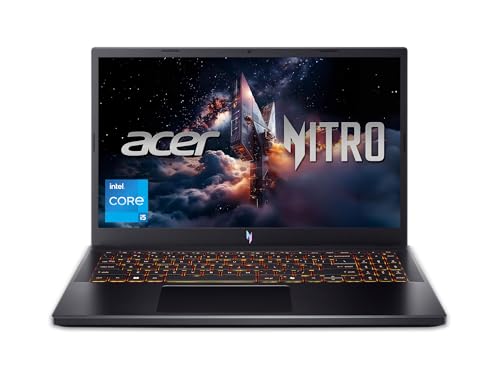
The HP Victus is a completed project. It’s balanced, convenient, and good for mixed use, but its gaming potential is capped from day one by the RTX 3050’s 4GB VRAM. The Acer Nitro V is a performance-first platform. It requires a mandatory ~$30 RAM upgrade out of the gate, but then it delivers significantly superior gaming performance and modern features (DLSS 3) that will keep it relevant for years longer.
MSI GF63 Vs Asus TUF FX505DT– Best Gaming Laptops under $700
| MSI GF63 | Asus TUF FX505DT |
| CPU: Core i5-9300H | CPU: Quad-core AMD Ryzen 5 r5-3550h |
| Display: 15 6″ FHD (1920*1080) IPS-Level 60Hz | Display: 15.6” 120Hz full HD (1920×1080) IPS-type display |
| GPU:NVIDIA GeForce GTX1650 [Max-Q] 4G GDDR5 | GPU: Nvidia GeForce GTX 1650 4GB graphics |
| Memory: 8GB DDR4 2666MHz | Memory: 8GB DDR4 RAM |
| Connectivity: Wi-Fi 5 (802.11ac); (2.4 & 5 GHz), Bluetooth 5.0 | Connectivity:Bluetooth, 802.11a/b/g/n/ac |
| Storage: 512 GB SSD | Storage: 256GB NVMe SSD |
| Ports: USB 3 2 Gen1 Type C *1 USB 3 2 Gen1 *3 | Ports: 1 USB 3.0, 2 USB 3.0,HDMI |
| Dimensions: 14.13 x 9.99 x 0.85 | Dimensions: 14.2 x 10.3 x 1 |
Performance
As anticipated the Asus kicks-off some serious juice when the SSD, GTX 1650, CPU and the IPS panel are combined together. When it comes to Full HD gaming performance, games like Far cry 5 managed to top up 40+ fps and Metro exodus managed to hit 30 fps. It will not give 120 fps at ultra-settings for sure but I’d say this is pretty decent.
Also with CS:GO, Fortnite, Rainbow six siege it achieved 109,112,96 frame rates respectively at max, very high and medium. And using in the performance mode is what most experts recommend since it won’t produce a loud fan noise. You can say it’s a little better than half the performance of the Razer blade 15 for both gaming and CPU performance.
When we talk about the MSI it will definitely fulfill your real world functions such as web browsing and streaming for lengthy sessions. When it comes down to gaming this will definitely be a worthy competitor for the Asus. Games like Far cry 5,shadow of the tomb raider reach between 40-50 fps at Full HD. If you wanna play games like Assassin’s Creed Odyssey at 60+ fps consider compromising the resolution.

Battery life and Heat
MSI battery power is 51W which means it lasts for about 5 hours at mid-brightness and that’s the average value for all these mid-range gaming laptops. Gaming sessions last around 1 hour at maximum brightness.
The average surface temperature is about 24 degrees celsius which is pretty fine. The CPU and GPU heats up to 70-80 degrees celsius during intense gaming sessions and when higher processing power is required. This is quite normal. For the Asus it can last up to 3 hours on average on most gaming sessions with good gaming settings. However it does get a little hot on the right side during intense usage. But the coolants do their job right nonetheless.
Design and Ports
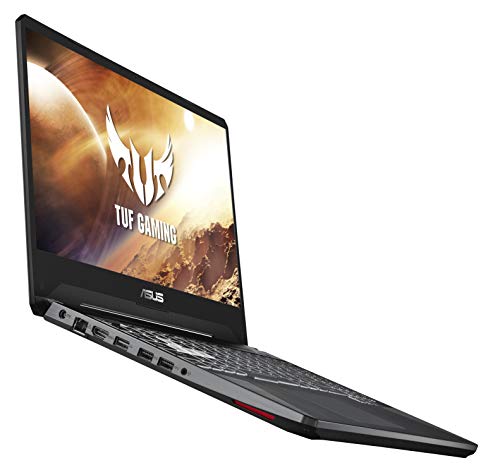
The Asus has the similar TUF series design, and has a matte design on the lid. Aluminum looks repeated on the plastic. Keyboard has RGB backlighting and can be customized with the software. Air vents are behind the chassis and the bottom. Trackpad is not that bad although at times it does lag a bit. Not to mention the pre-installed Asus software to monitor CPU,GPU temps, fan speeds, RGB etc. All the ports are on the left side. However it has no card reader, Thunderbolt or Display port.
MSI on the other hand has a good screen to body ratio and a thin bezel design with a good IPS panel. Design is not that fancy but lightweight and extremely portable. RGB backlit keyboard has a good feel but the same can’t be said for the touchpad for it’s not that responsive. Ports are located both on the left and right side. This too doesn’t possess a SD card reader but the type C kind of makes up for it. No thunderbolt port as well.
Conclusion
Both the laptops have their own pros and cons. To start off neither has an off the chart sort of battery life, but they are not that bad, Although critics complain that the Asus lacks more in this criteria. When it comes to the audio quality though MSI is behind the Asus.
Nevertheless if you are looking for 1080p gaming at 60+ frame rates for as many games as allowed both these serve well. They possess all the ports required on a regular basis and keyboards are quite user-friendly , design is not stunning but creditable. Undeniably both the laptops qualify for Best Gaming Laptops Under $800, delivering awesome performance.
Purchase here->
Purchase here->
Best Gaming Laptop under $500– Bonus tip
Lenovo IdeaPad 3 14″ Laptop
- CPU- AMD Ryzen 5 3500U
- Radeon Vega 8 GPU
- 8GB DDR4 RAM
- 256GB SSD
- 14-inch Full HD
- Bluetooth 4.1, up to 2×2 Wi-Fi 5, three USB ports, and HDMI

Since 500 qualifies as under 800 we thought of adding a bonus for Best Gaming Laptops Under $800. Lenovo Ideapad is a great gaming laptop under $500 without a second thought. The AMD 5 355U is a great CPU, even better than the intel i3- 8145U. This laptop is most recommended because of its powerful Vega GPU for $500. You can play many modern AAA titles at decent settings with this configuration.
League of Legends, FIFA 20 can be played at good frame rates in ultra settings configuration. The narrow bezels on either side makes for a sturdy design. And it weighs only 3.30lbs. The material tends to retain a bit of fingerprint though. The connectivity is plenty though it lacks a USB-Type C.
The keyboard is good for gaming and has nice tactile feedback. No backlight though. The laptop speakers provide a good all around sound. However the battery life isn’t all too great. Allowing only 2 hours during gaming sessions. And the color average is below average which isn’t an issue with gaming though.
Nonetheless the Lenovo Ideapad is a great gaming laptop under $500. A powerful processing and graphical unit enhances the cost-effectiveness.
Purchase here->
About the Author


